
A single wrong furniture pick in a 400 sq ft apartment doesn’t just look bad-it eats your floor space alive. That’s why every small-home project deserves a mood board before it gets a credit card swipe. Below are 11 concrete home mood board ideas built for compact living, each packed with specific materials, colors, and objects you can start collecting today.
Key Takeaways
- A mood board is a visual roadmap for your interior space that saves money, time, and random impulse buys-mood boards help avoid costly mistakes in design projects by letting you test choices on paper first.
- This article is a listicle of 11 concrete mood board ideas tailored to small homes, ADUs, and apartments, each with a suggested high-quality, photorealistic image concept you can reference or recreate.
- You can use both physical and digital mood boards (Canva, Milanote, Pinterest, drag and drop tools) to test colors, furniture, and layouts before you commit to anything permanent.
- Every idea includes specific objects and materials-linen sofas, white oak floors, 2026 paint colors-so you can replicate the look at home.
- This post is created from the perspective of the Small Homes USA Newsletter, focusing on compact, efficient, and sustainable interior design projects.
Why Mood Boards Matter For Small Homes & ADUs
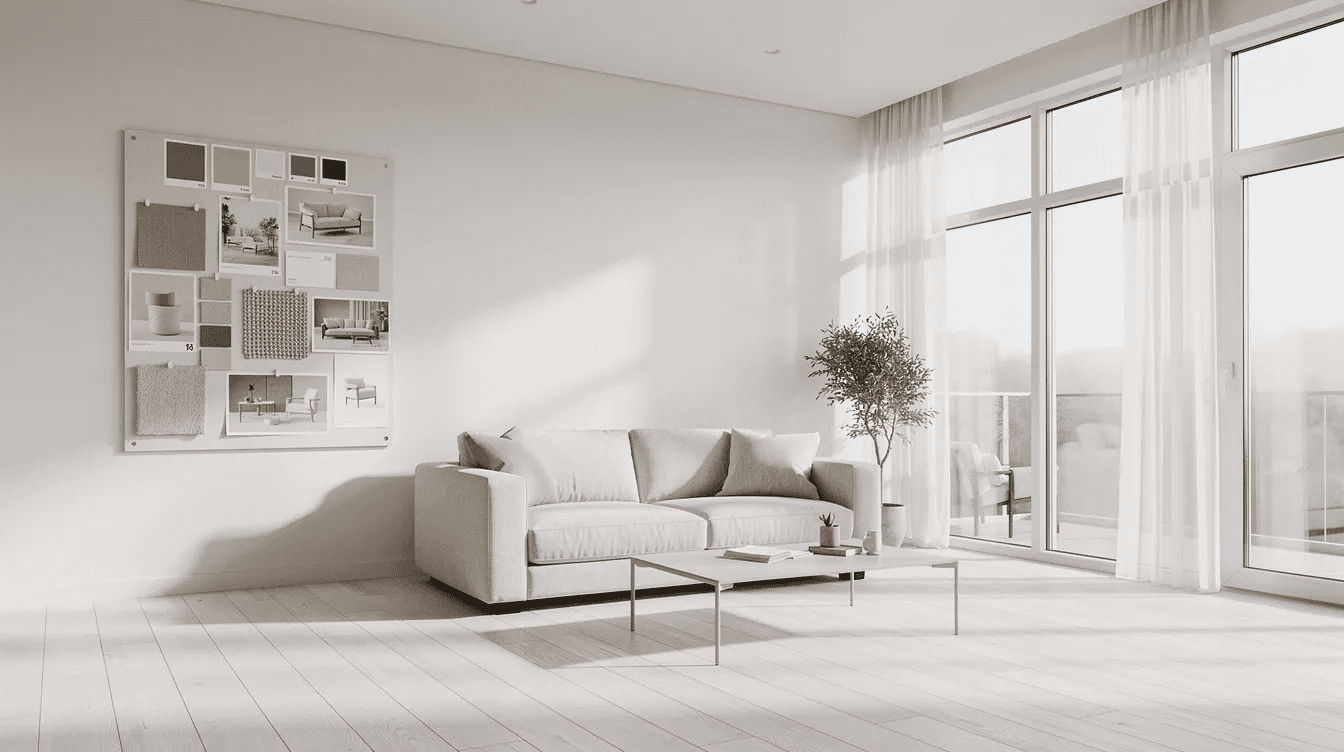
An interior design mood board keeps small spaces cohesive, prevents visual clutter, and supports clear decision-making at every step. Mood boards clarify design direction before starting projects by forcing you to see everything side by side-flooring, paint, furniture scale-on a single page.
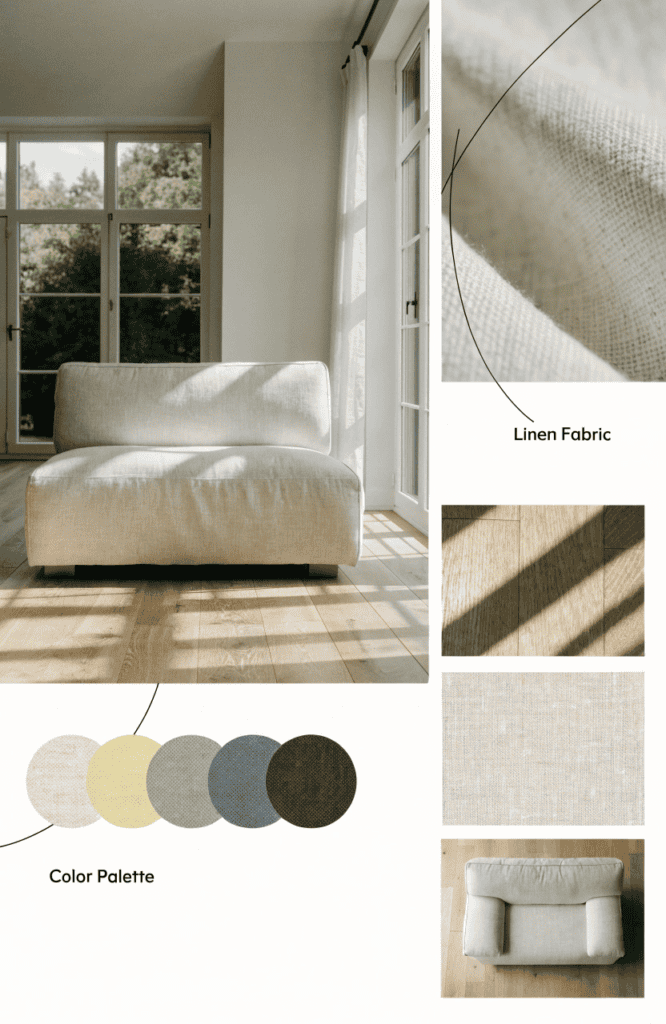
A mood board visually represents ideas for a design project. In concrete terms, it’s a single page (digital or physical board) combining color swatches, flooring samples, furniture images, lighting options, and decor for one interior space. It helps visualize the overall aesthetic of a space before a single dollar is spent.
In compact homes-studios, ADUs under 800 sq ft-one oversized sofa or too-dark flooring choice can overwhelm the room. ADU permitting in the U.S. rose by about 1,100% between 2015 and 2025, meaning more people are designing for tight footprints than ever before. Mood boards help clarify the overall style and mood of a space and they assist in avoiding costly design mistakes that hit harder when every square foot matters.
Unlike boards for large homes, small-home mood boards demand tighter color palettes, multipurpose furniture, and careful attention to scale. They also facilitate communication between designers and clients-or between you and your partner arguing over cabinet colors.
How To Start Creating Mood Boards (Digital vs. Physical)
Digital mood boards let you work fast: Canva offers drag-and-drop templates for creating collages and layout designs, Milanote acts as a flexible visual canvas for organizing design ideas, and Pinterest is used for gathering inspiration and color schemes. Physical boards-foam core, printed photos, fabric swatches, and tile samples-give you tactile feedback that screens can’t replicate. A 2025 survey of 328 designers showed that 52% use digital tools specifically for creating mood boards.
Here’s a simple 4-step workflow:
- Define the project – e.g., “300 sq ft ADU in Portland, guest rental, $8K furniture budget.”
- Gather inspiration – save room photos, product screenshots, and color references.
- Curate – select one hero piece, 3 color swatches, 2 textures, 3 furniture pieces, and 1 lighting type.
- Refine – arrange everything on your board, check for cohesion, and swap out anything that fights the vision.
A mood board includes images, colors, textures, and typography-anything that helps convey the direction of the space. Canva provides templates specifically for mood board creation, and Milanote offers over 3 million free images for mood boards. Use simple drag and drop layouts instead of complex graphic design software. Save manufacturer images and screenshots directly into your board app, then export as a PDF to print and pin up at home.
1. Bright Nordic Studio Mood Board
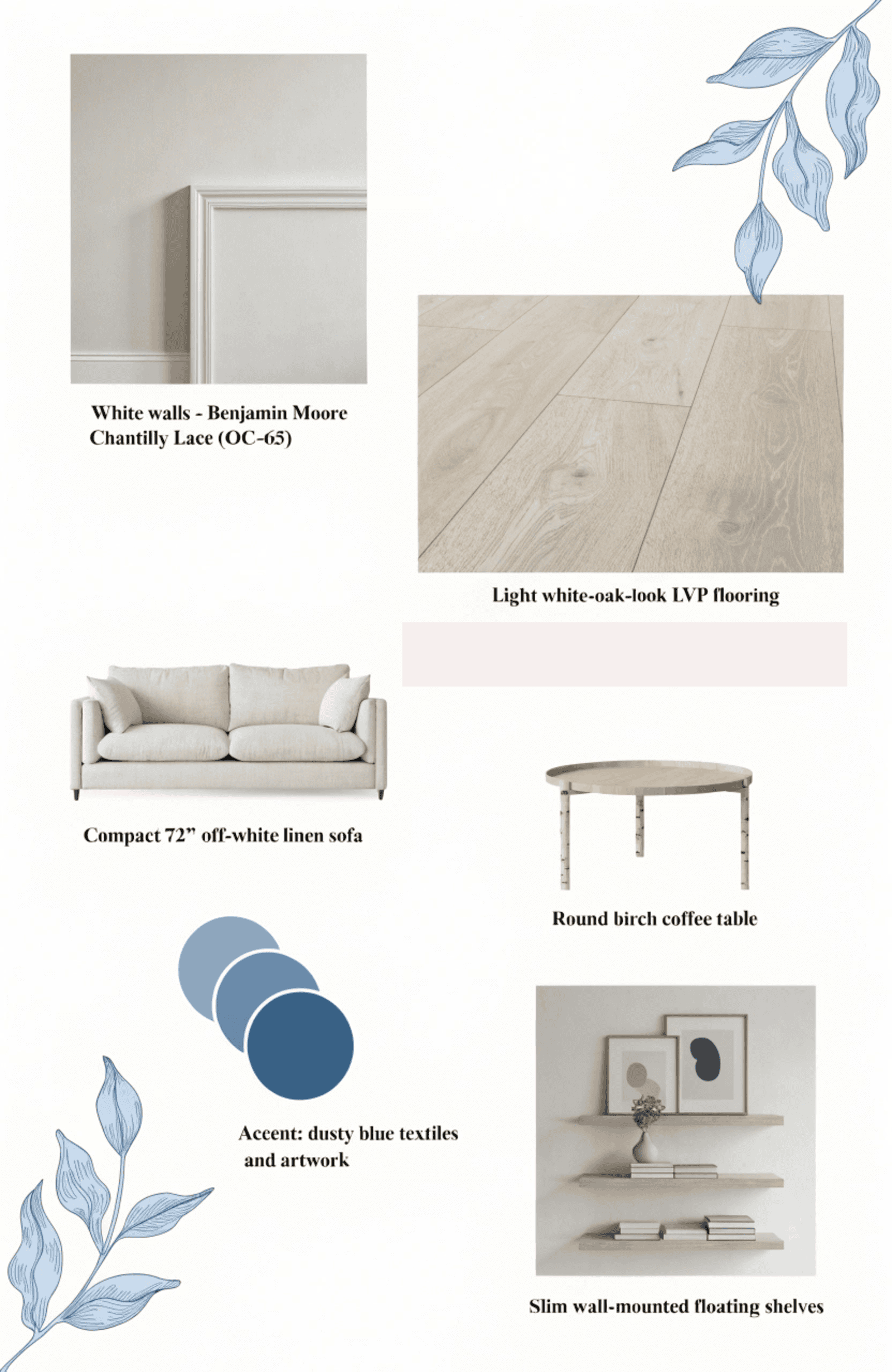
This mood board idea is built for a 350–500 sq ft city studio that needs to feel airy and uncluttered. Modern European Minimalism emphasizes simplicity and natural light, and this concept leans into that philosophy.
What to feature on the board:
- White walls – Benjamin Moore Chantilly Lace (OC-65)
- Light white-oak-look LVP flooring (searches for light hardwood floors increased 5× year-over-year on Houzz)
- Compact 72″ off-white linen sofa
- Round birch coffee table
- Slim wall-mounted floating shelves
- Accent: dusty blue textiles and artwork
Stick to warm neutrals and one muted accent color to keep the interior space calm but not sterile. Small apartments benefit from layering textures to create warmth and comfort-pair linen upholstery with a wool throw and a ribbed ceramic vase to add depth without adding clutter.
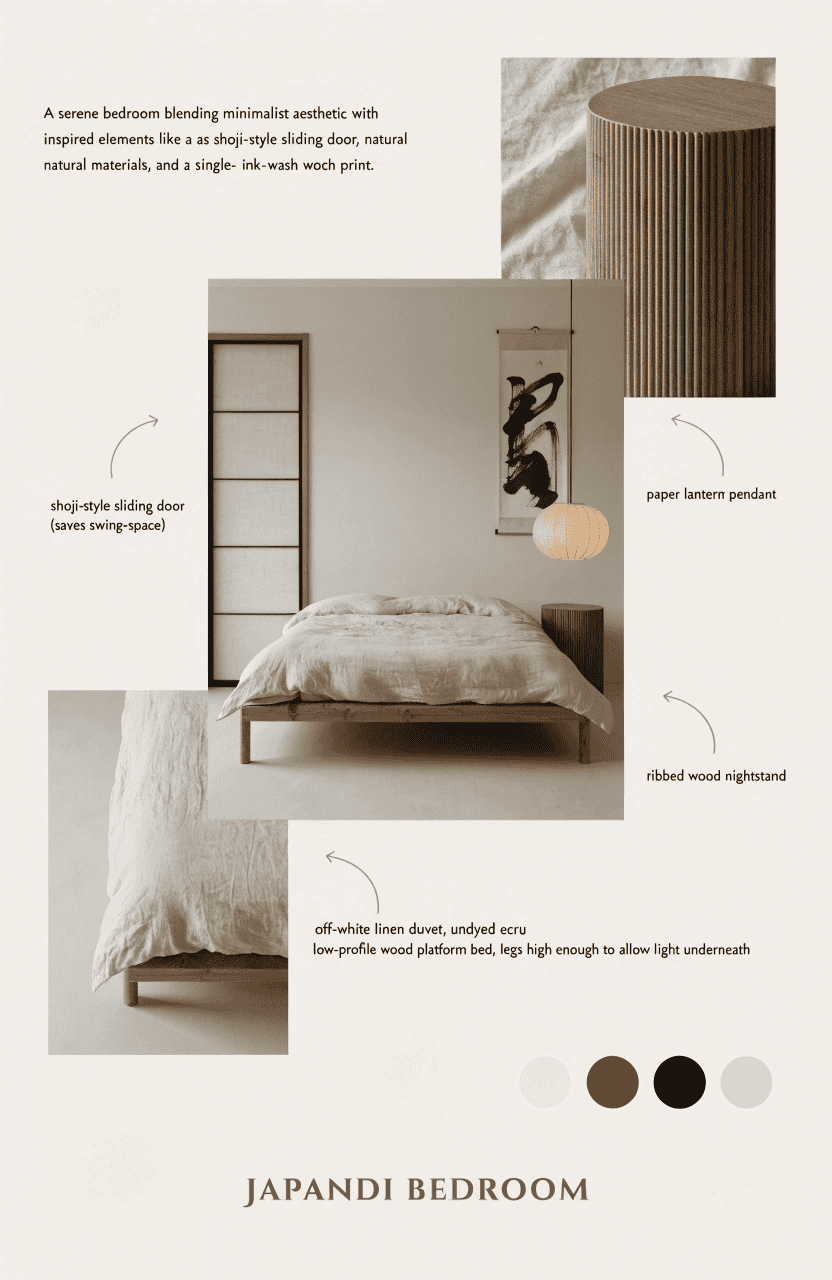
2. Soft Minimal Japandi Bedroom Mood Board
Japandi blends Japanese calm with Scandinavian warmth and remains a dominant trend heading into 2026. Key developments for 2025 include more tactile surfaces like fluted wood and ribbed paneling, deeper accent tones, and biophilic elements. It’s ideal for tiny bedrooms and lofts where visual noise kills relaxation.
Board ideas to explore:
- Low-profile wood platform bed (legs high enough to allow light underneath)
- Off-white linen duvet in undyed ecru
- One shoji-style sliding door (saves swing-space)
- Ribbed wood nightstand
- Paper lantern pendant
- Single ink-wash wall print
Recommend a tight palette: warm white, mushroom, oatmeal, and black accents. Mood boards evoke emotional connections to design concepts, and this style supports better sleep by reducing visual stimulation. Close up shots of fabric swatches and small wood tiles on the board bring the feel of the room to life before you build it.
3. Compact Coastal ADU Mood Board
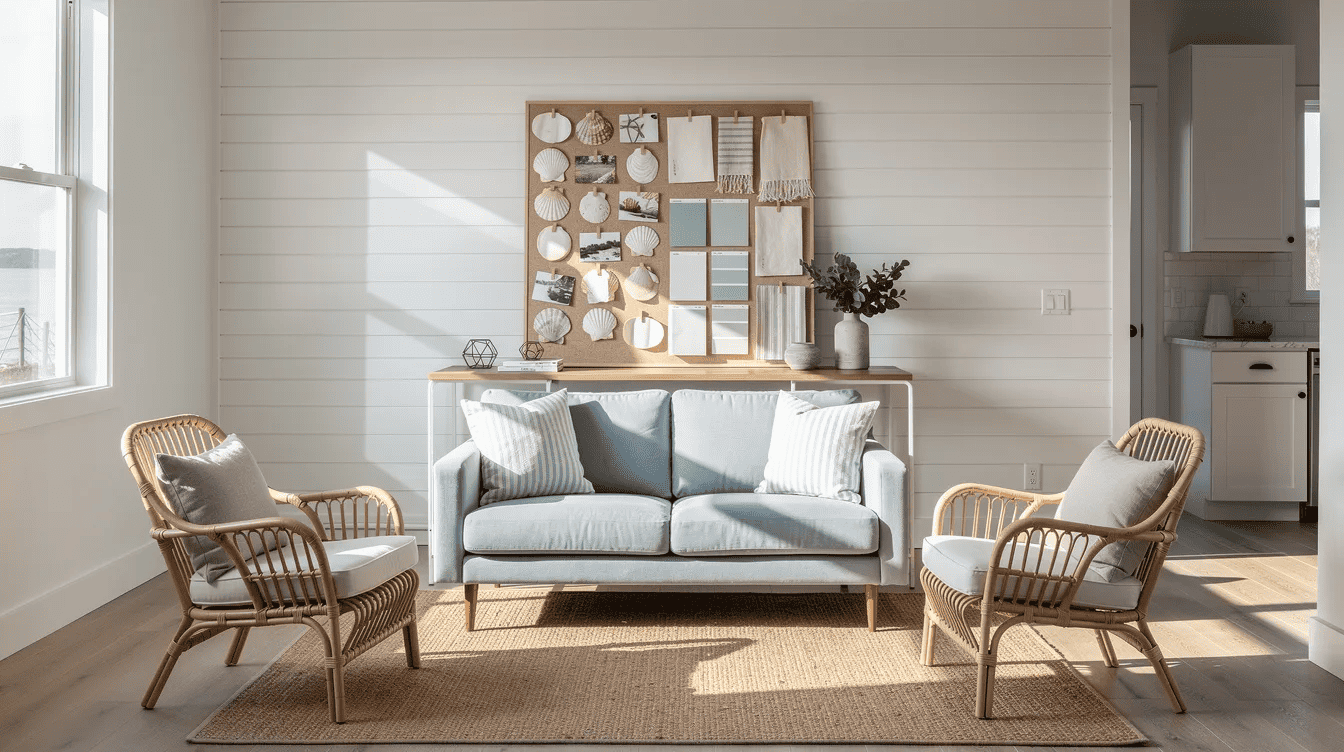
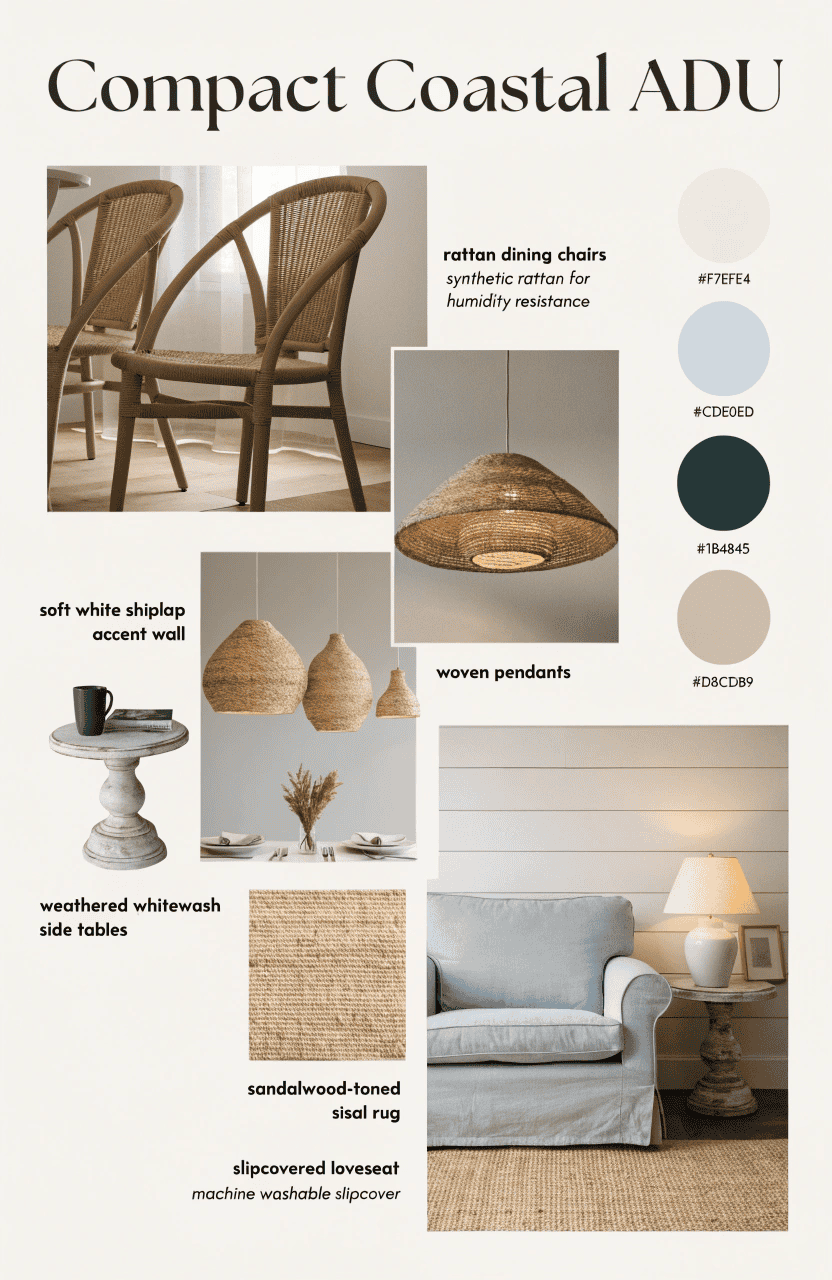
Designed for a 400–600 sq ft backyard ADU near the coast or a lake, this board works for guest quarters or short-term rentals. Coastal Luxe design combines airy whites and muted blues-a natural fit for compact waterside living.
Specific materials:
- Soft white shiplap accent wall
- Sandy beige sisal rug
- Slipcovered loveseat in pale blue (machine-washable)
- Rattan dining chairs (synthetic rattan for humidity resistance)
- Woven pendants, weathered whitewash side tables
Use a 3-color palette inspired by a real beach photo: warm sand, seafoam green, and soft sky blue. Color palettes and materials can be used to create thematic designs that feel cohesive rather than costume-y. For coastal rentals, select durable, washable fabrics and moisture-resistant flooring like LVP or porcelain tile.
4. Urban Industrial Loft Mood Board (Small Footprint)
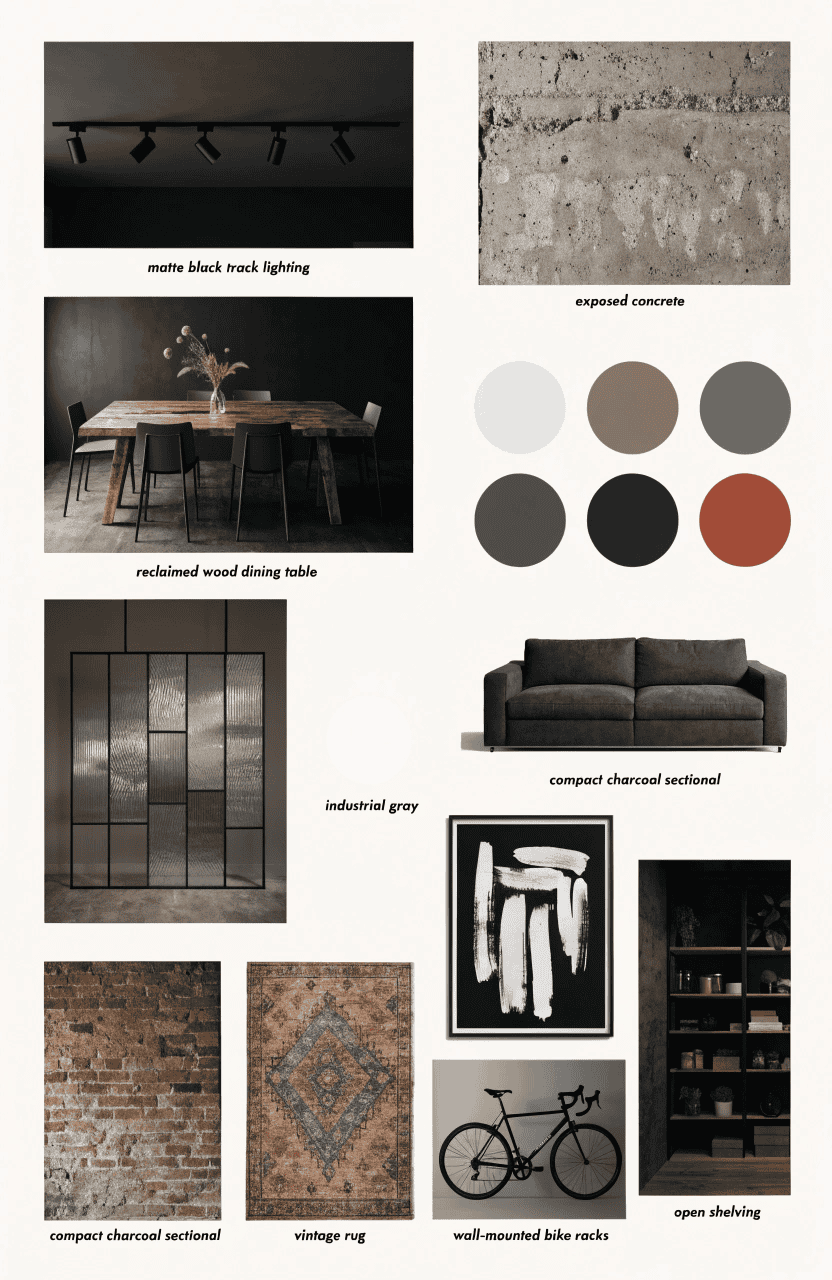
For 500–700 sq ft city loft spaces with high ceilings but limited floor area, this mood board idea emphasizes vertical planning. Using vertical styling can help make small spaces feel larger and more organized-think floor-to-ceiling shelving and wall-mounted storage.
Key components:
- Exposed concrete or brick wall imagery as the texture shots anchor
- Matte black track lighting
- Reclaimed wood dining table for warmth
- Steel-framed glass room divider
- Compact charcoal sectional with slim arms
- Vintage rug in rust and indigo, black-framed artwork
- Wall-mounted bike racks and open shelving
To avoid making industrial spaces feel cold, add warm wood tones and layered lighting to the board. Small apartments benefit from layering textures-a wool throw over a leather chair, a jute rug on concrete-to offset hard surfaces.
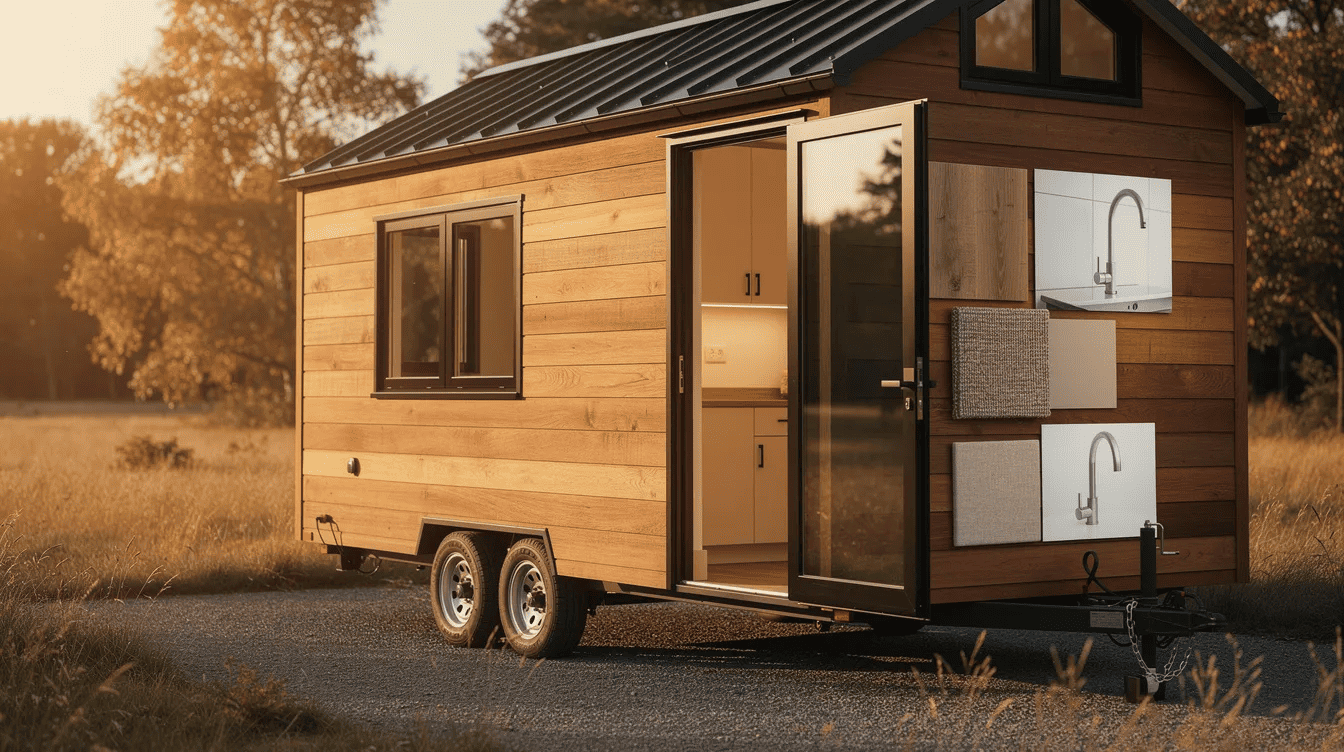
5. Tiny House On Wheels Mood Board
For 200–300 sq ft tiny houses on trailers, every square inch and every color choice matters. Creative mood boards should focus on multi-functionality and scale above all else.
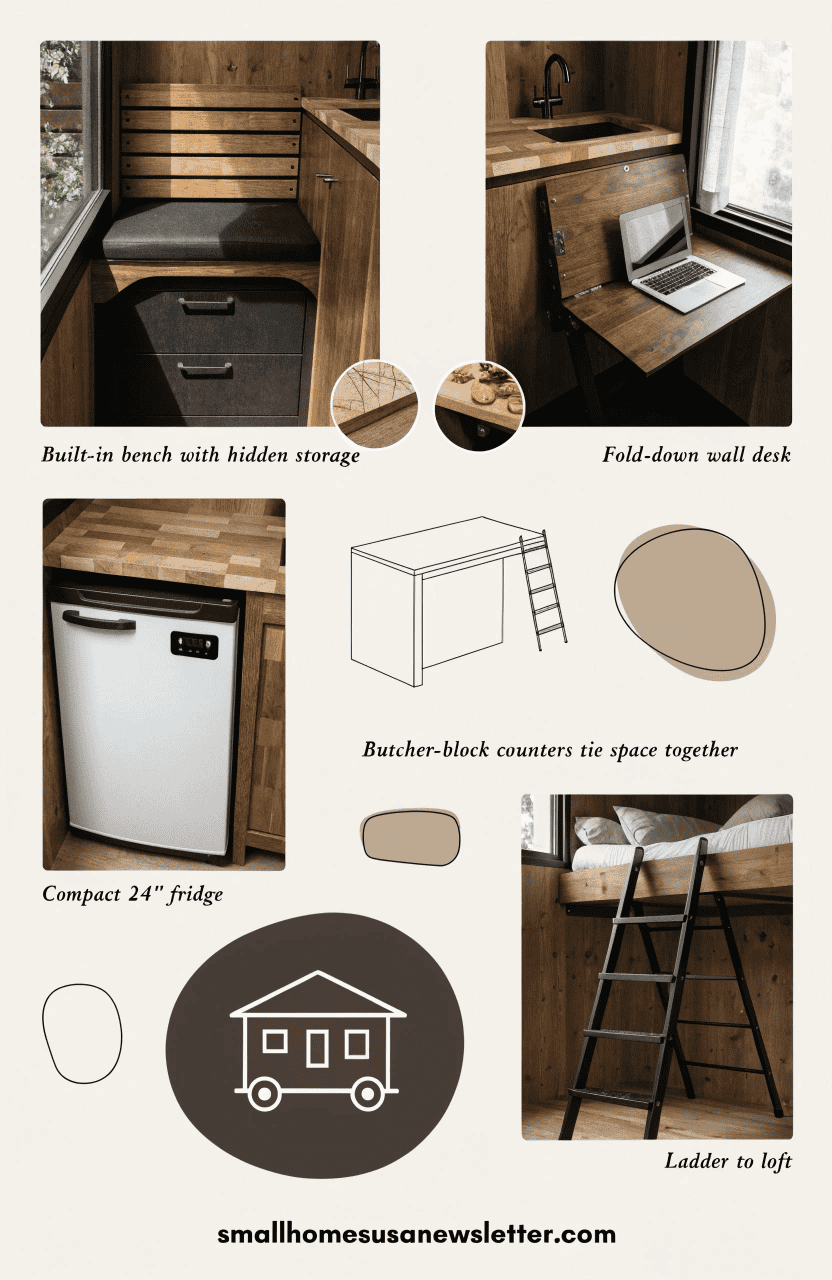
Concrete objects:
- Built-in bench with hidden storage
- Fold-down wall desk
- Compact 24″ fridge
- Ladder to loft
- Hero material: butcher-block counters tying the space together
Limit the palette to 3 main colors plus one metal finish: warm white walls, sage green cabinetry, honey wood counters, and brushed brass hardware. This approach translates directly to vans, skoolies, or other mobile homes where visual fragmentation makes tight spaces feel chaotic.
6. Multi-Functional Family Living Room Mood Board
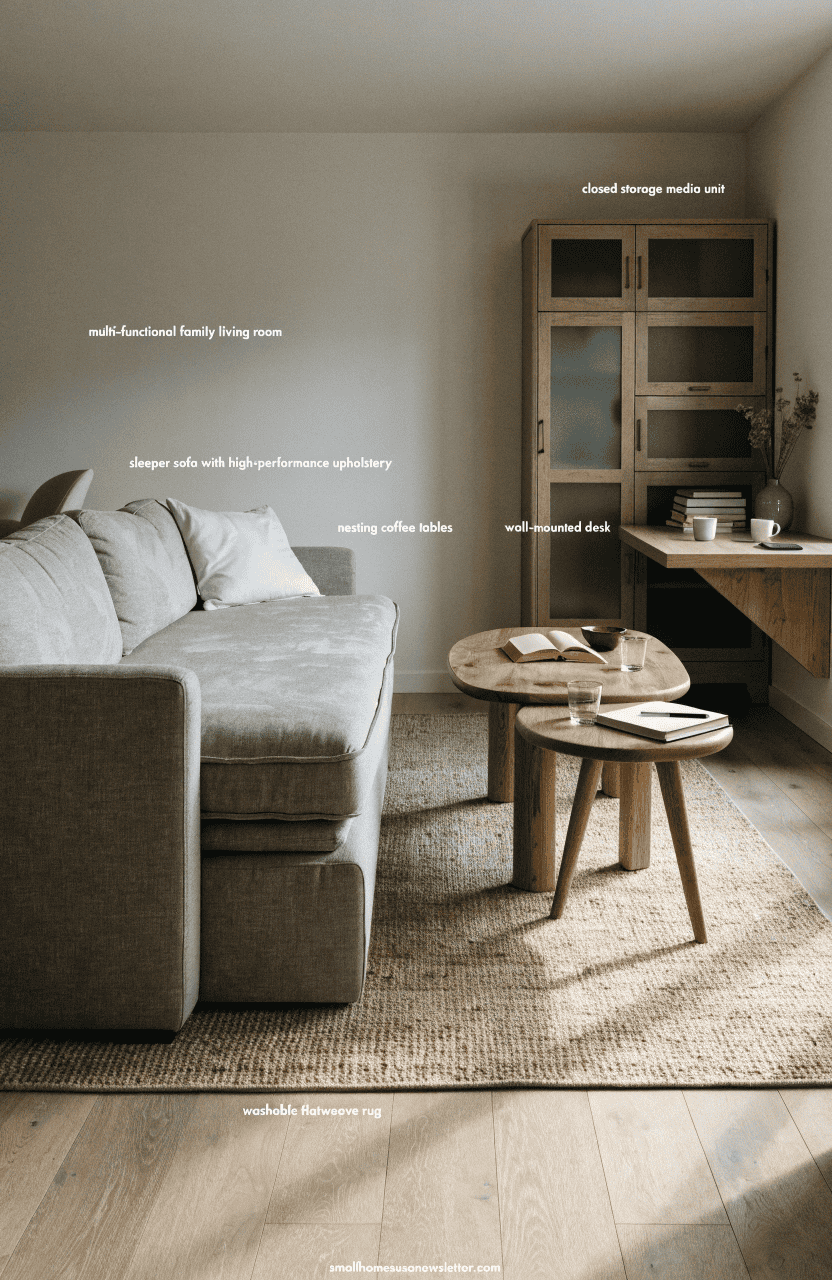
When your living room doubles as playroom, office, and guest room in a 900–1,200 sq ft home, the mood board must map zones. Mood boards can help define zones in small spaces effectively-add text labels directly on the board (“Work zone,” “Play storage,” “Guest bed”) to visualize how the room functions.
Board elements:
- Sleeper sofa with high-performance upholstery
- Nesting coffee tables
- Wall-mounted desk
- Closed storage media unit
- Washable flatweave rug (6′ x 9′ in a 12′ x 15′ room)
French Country Farmhouse blends comfort with sun-warmed neutrals if you want a lived-in feel. Mix kid-friendly durable materials with aesthetically pleasing decor so adults enjoy the room too.
7. Micro-Kitchen Mood Board For Studio Apartments
For kitchens under 7 linear feet or galley kitchens in studios and ADUs, restraint is everything.
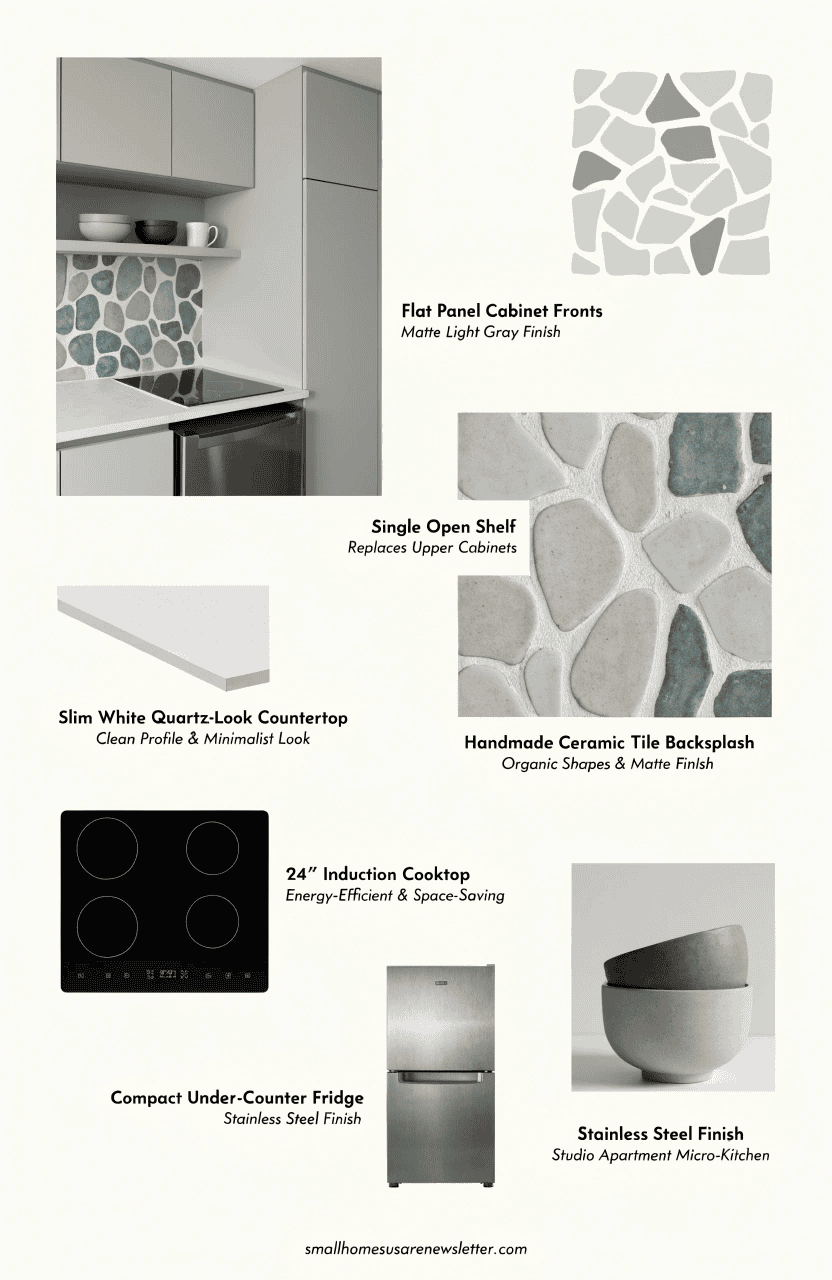
Concrete inclusions:
- Flat-panel cabinet fronts in matte light gray
- Slim white quartz-look countertop
- Single open shelf replacing upper cabinets
- 24″ induction cooktop and compact under-counter fridge
- One strong accent: patterned backsplash tile (handmade ceramic or matte mosaic)
While Art Deco Revival showcases bold geometry and opulent finishes, micro-kitchens benefit from picking just one accent and letting everything else recede. Integrate the kitchen board with your main home mood board to keep the entire interior design cohesive-shared metal finishes and wood tones are the link.
8. Cozy Reading Nook & Home Office Corner Mood Board
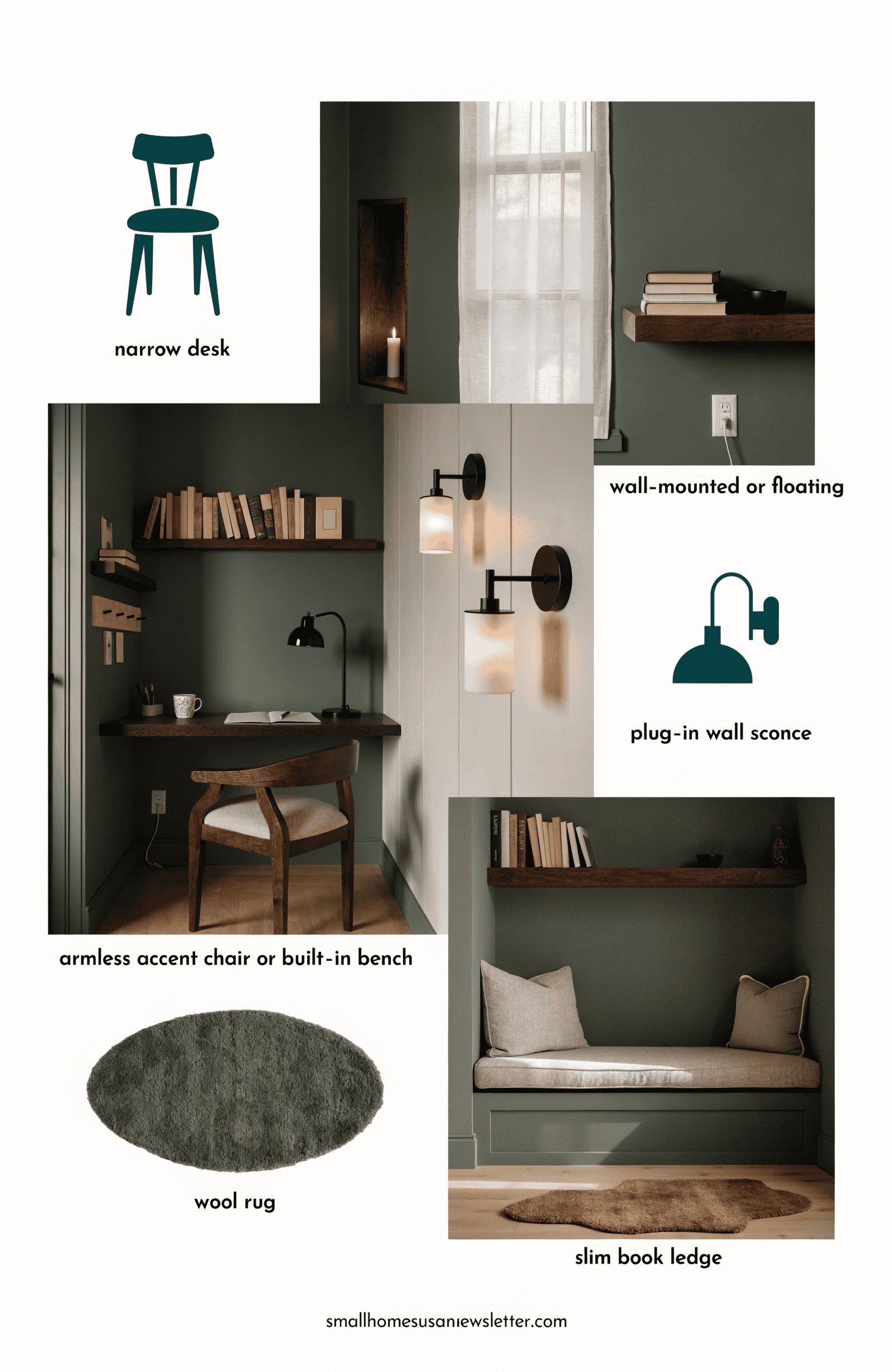
This board is for carving out a micro-zone (4’–6′ wide) in a small home: a reading nook, window seat, or compact home office under stairs.
Object ideas:
- Narrow wall-mounted desk or floating shelf
- Armless accent chair or built-in bench
- Plug-in wall sconces for task lighting
- Small wool rug
- Slim book ledge
Choose a deep olive or ink-blue accent wall to visually mark the nook as its own destination. Dark and Glamorous style uses moody palettes and plush fabrics, which works surprisingly well in a micro-zone. Timeless Mountain Lodge style features reclaimed wood and wool textiles if you want something warmer. Note on the board where outlets, cable routing, and task lighting go-practical details belong on mood boards too.
9. Eco-Friendly, Low-Waste Mood Board For Sustainable Small Homes
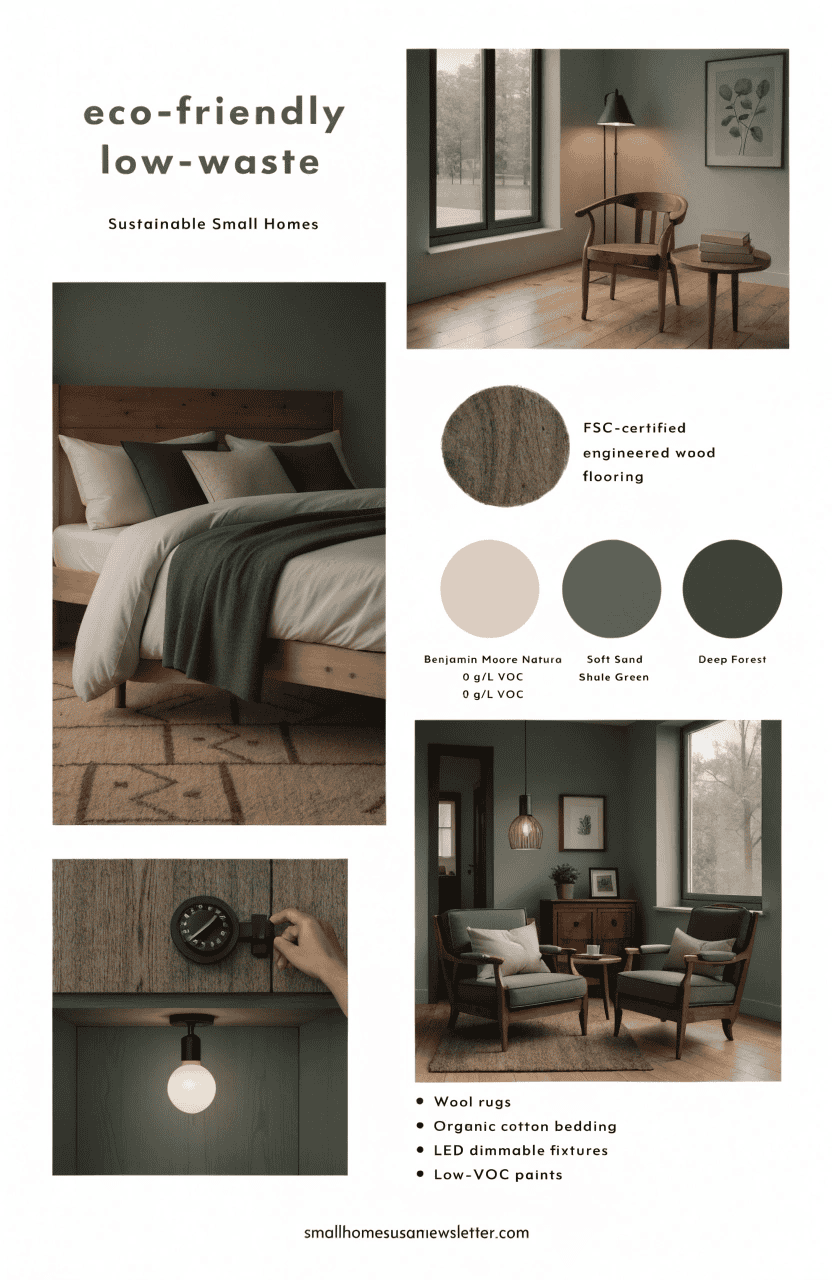
This mood board helps readers align aesthetics with sustainability in their design projects. The U.S. sustainable interior finishing materials market was valued at roughly $12 billion in 2024, projected to grow at ~3.9% CAGR through 2034-the demand is real.
Specific product types:
- FSC-certified engineered wood flooring
- Wool rugs and organic cotton bedding
- LED dimmable fixtures
- Low-VOC paints (e.g., Benjamin Moore Natura line, rated 0 g/L VOC)
- Secondhand or vintage furniture imagery
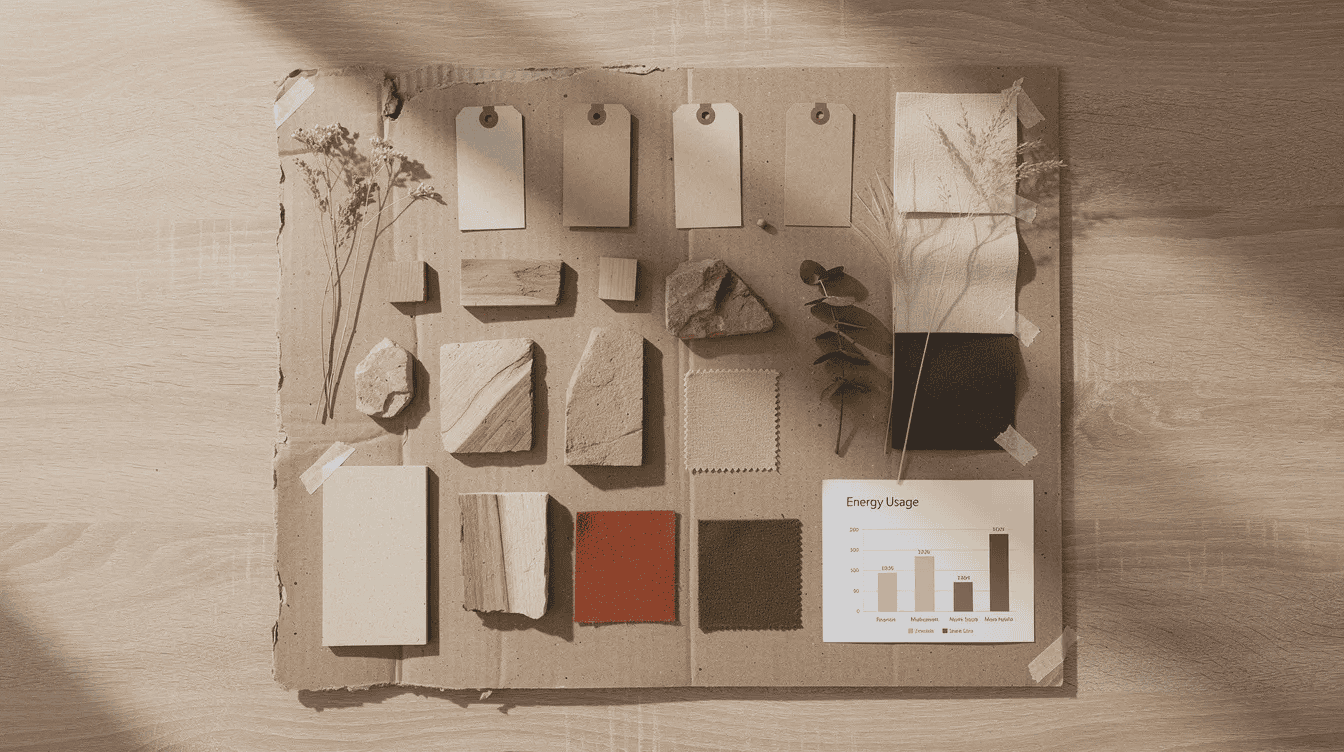
Use earthy greens, clay tones, and natural stone or terrazzo looks to visually convey the eco theme. Label sources right on the board-“Facebook Marketplace find,” “local ReStore tile”-to encourage reuse instead of new-only purchases.
10. All-Digital Mood Board With Drag-and-Drop Tools
For readers who want to work entirely online, digital mood boards allow easy rearrangement and sharing of ideas from any device.
Build a cohesive interior design mood board using a grid layout in Canva or Milanote: drop in 1–2 wide room photos, several product cutouts, and 3–5 color swatches. Use built-in mood board templates to speed up the creative process, then customize fonts, labels, and frames to match your home’s unique style.
Tools worth knowing:
Tool | Best For | Key Feature |
|---|---|---|
Canva | Beginners | Drag and drop templates, free tier |
Milanote | Visual thinkers | 3M+ free images, flexible canvas |
Morpholio Board | Design pros | Augmented reality tools for interior design |
Adobe Illustrator | Advanced users | Precise layout control |
Planner 5D | Collaboration | Real-time collaboration on mood boards |
Inspiration gathering | Massive image library, shareable boards |
Export your finished digital mood boards as PDFs or JPGs to print and pin up at home for daily reference. Add images from manufacturer websites to keep everything linked to real, purchasable products.
11. Whole-Home Mood Board System For Small Homes
This idea is a simple structure: one master mood board for the whole home plus mini boards for each key room (living, kitchen, bath, bedroom). A cohesive mood board can mix various design elements to tell a visual story that unifies every corner.
Reuse recurring elements-the same metal finish or wood tone-across all boards so the small home feels larger and more connected. Start with the main shared space, then spin off separate boards that reference the core palette and materials.
Date your boards (e.g., “Spring 2026 refresh”) so you can track how your home evolves season to season. In homes under about 1,000 sq ft, repeating 2–3 main color schemes and one wood tone across all boards will make the space feel significantly more expansive.
Tips For Photographing Your Own Home Mood Boards
Good photos of your boards make it easier to compare options, share with family, get feedback from professional designers, or reference on future design projects.
Shooting tips:
- Use indirect daylight near a window-avoid overhead yellow lighting
- Shoot from directly above for flat lays, or at 45° for boards hung on walls
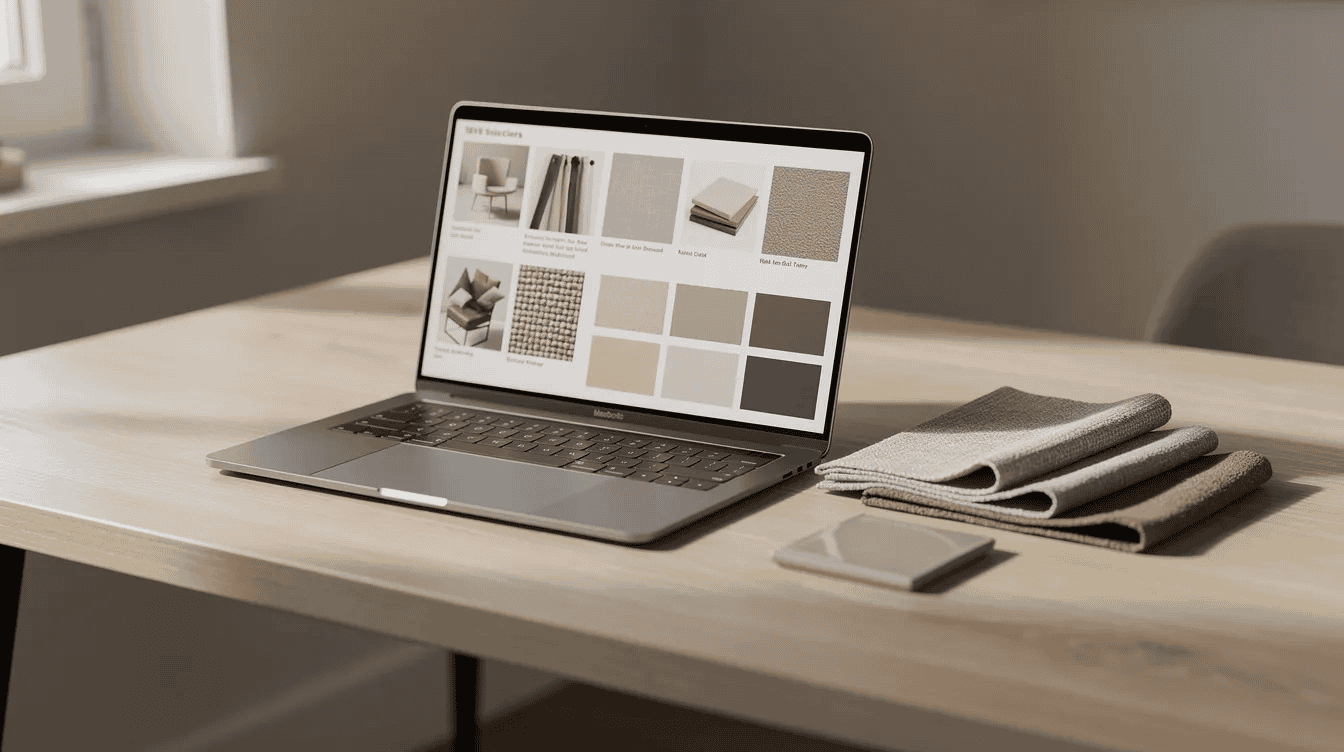
- Include surrounding context (desk edge, coffee cup, laptop) so the image feels like a real life creative workspace
- Use smartphone HDR mode and tap to focus on the area with the most detail-a tile or fabric swatch
- Lightly edit exposure and contrast for clarity in your high resolution images
Interactive elements such as wire grids or magnetic boards can double as functional organizers and look great in photos. Include texture shots and close up shots of materials to capture the tactile quality that flat digital images sometimes miss.
How Small Homes USA Newsletter Uses Mood Boards
The Small Homes USA Newsletter team builds interior design mood boards for every featured house or ADU tour, from 250 sq ft cabins to 1,000 sq ft bungalows. These boards help organize each issue: showcasing floor plans, color palettes, storage ideas, and sustainable materials in a single, easy-to-scan visual that readers can explore for personal inspiration.
Imagine seeing a monthly digital mood board collection in your inbox with clickable sources for paint, fixtures, and compact furniture. Subscribing is free and especially helpful for downsizers, first-time small-home buyers, and anyone planning an accessory dwelling unit project. Sign up to get inspired by real small-home tours paired with actionable design direction every week.
FAQ: Home Mood Board Ideas For Small Spaces
How do I choose a starting point for my home mood board?
Start with one concrete item you already own or absolutely plan to buy-a rug, sofa, or artwork from a recent 2024–2026 purchase-and build colors and textures around it. Anchoring the mood board to a real object keeps the design grounded and prevents purely theoretical boards that don’t translate into the actual interior space. This is the single most helpful step in the entire creative process.
Can I reuse one mood board for an entire small home?
A single master mood board can guide the whole interior design, but it works best when supplemented with smaller boards for each room that reference the same core palette and materials. In homes under about 1,000 sq ft, repeating 2–3 main colors and one wood tone across all boards will make the space feel larger and more cohesive. Think of it as one theme with room-specific variations.
What if my partner’s style is totally different from mine?
Create two separate digital mood boards first to clearly visualize each person’s taste, then build a third “blended” board that intentionally combines favorite design elements from both. Compromise on big, permanent items (floors, cabinets, sofa) and allow playful variation in smaller, changeable elements like art, cushions, and throws. This approach turns disagreement into a fun, structured exercise.
How detailed should my home mood board be before I start buying?
At minimum, figure out your flooring type, wall color family, main furniture silhouettes, and metal finishes on the board before making large purchases. Smaller decor like pillows, lamps, and accessories can be filled in later, but big pieces should always be checked against the mood board to avoid costly mismatches. The board is your visual insurance policy.
Do I need design software skills to make effective mood boards?
No. Simple drag and drop tools and basic photo apps are enough. Most interior design mood boards are essentially well-organized collages, not complex graphic design projects. Focus on clarity-showing all key elements of the interior space together so you can comment on what works and what doesn’t-rather than on fancy effects or typography. If you can arrange photos on a phone screen, you can build a mood board.
