
Texas has become one of the most talked-about states for the tiny house movement, offering a blend of urban and rural tiny house living that few other states can match. But the reality of going tiny here is more nuanced than the photos and video tours suggest. This guide breaks down what you actually need to know – laws, costs, communities, and practical setup – so you can make informed decisions today.
Key Takeaways
- Texas is one of the most tiny house–friendly states, but rules vary widely by city and county. There is no single statewide code governing tiny houses.
- Tiny houses on wheels (THOWs) are usually treated as RVs and must often be parked in licensed RV parks or dedicated tiny house communities. Tiny homes on foundations follow local residential and ADU building codes.
- Lake Dallas, Spur, Austin, and Fort Worth are among the friendliest places for tiny home owners, while Dallas requires a special exemption.
- Costs in 2024–2026 range from roughly $40,000 to $120,000+ depending on whether you choose a park model, custom THOW, or small home on a foundation.
- The Small Homes USA Newsletter is a free email resource for ongoing updates, design ideas, and changing Texas tiny house regulations.
Why Tiny Houses in Texas Are Booming
Between 2020 and 2026, housing costs in cities like Austin, Houston, and San Antonio pushed more buyers toward affordable options. Texas is popular for tiny homes due to its favorable tax climate – the state has no income tax – wide open spaces, and a low cost of living compared to places like California. Tiny homes are growing in popularity across Texas as people discover that a smaller home means reduced utility costs, a simpler and lower-clutter life, and a path that generally costs less to build or buy than a traditional house.
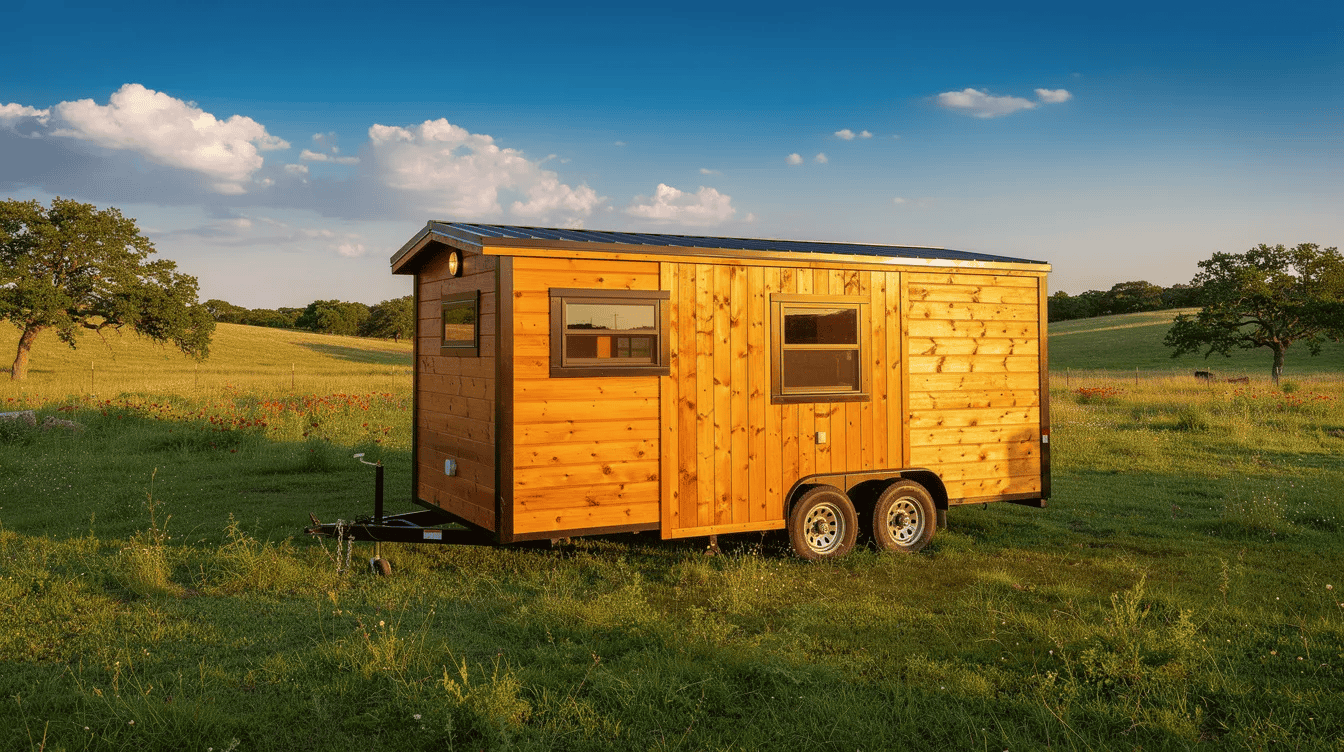
Texas offers diverse landscapes for outdoor recreation, from Hill Country trails to Gulf Coast beaches, creating opportunity for everything from off-grid homesteads to planned tiny house communities near lakes and city suburbs. Post-COVID remote workers in 2024–2026 have leaned into movable THOWs or lakefront park models instead of bigger suburban houses. For context, a tiny house typically means under 400 sq ft for RV and park model units, or under roughly 600–700 sq ft for small homes on foundations. There are currently 18 tiny house listings in Texas, and that number keeps climbing. The Small Homes USA Newsletter covers these developments weekly with design tours, ADU breakdowns, and practical tiny living tips across the country.
Texas Tiny House Laws, Codes, and Zoning (Explained Clearly)
Texas has no single statewide tiny house law. Whether you can live in a tiny house full-time depends on whether it sits on wheels or a foundation, and on your local city or county zoning rules. Regulations vary significantly between Texas counties and municipalities, so doing your homework before you buy is essential.
THOWs as RVs: Tiny houses on wheels are built on a trailer chassis and offer mobility, but Texas classifies them as travel trailers. They must be titled and registered through the Texas Department of Motor Vehicles. Texas has specific regulations for tiny houses on wheels – many cities ban full-time living in RVs outside approved parks. Tiny houses on wheels must often be parked in licensed RV parks or communities that explicitly allow them.
Foundation homes: Foundation-built tiny homes must comply with standard real estate regulations. Cities enforce strict building codes for tiny homes on permanent foundations, including minimum size, setback, and utility requirements. Many jurisdictions adopt International Residential Code Appendix Q for homes under 400 sq ft, but adoption is patchy. Tiny houses must also meet foundation requirements in flood-prone areas.
Key zoning patterns to note: some suburbs maintain 1,200–1,800 sq ft minimum house sizes. Rural areas often have fewer zoning restrictions compared to urban areas, and unincorporated areas typically lack stringent zoning regulations for tiny homes, though they may require On-Site Sewage Facility septic permits. Austin and Fort Worth have few restrictions on tiny houses, while Dallas requires a special exemption. Local homeowners associations may impose additional restrictions on tiny homes beyond what the city requires. Zoning laws can vary significantly from city to unincorporated land.
Quick checklist before you commit: Contact your local planning department. Confirm if THOWs are allowed as primary residences. Ask about minimum house size. Verify hookup rules for utilities, septic, and parking. Check if the state ADU law (SB 1412) applies to your property.
Where Tiny Houses Are Welcome: Cities, Counties, and Tiny House Communities
Texas is a patchwork. One town may embrace tiny house communities while the next bans them entirely. Always verify rules before buying land or moving a tiny house into a new area.

Lake Dallas (Denton County, near Dallas–Fort Worth) operates one of the first intentional tiny house communities in the Lone Star State. This planned development accepts only tiny homes on wheels certified under IRC plus Appendix Q and inspected by a Texas certified inspector. Lots fit homes 7.5–8.5 ft wide and up to 40 ft long. The community is owner-occupied only – no Airbnb or short-term rent allowed – with pad leases around $650/month.
Spur (Dickens County) is known as the tiny house capital of the USA. It allows tiny houses under 900 sq ft on permanent foundations with utility hookups and local inspections. The pro-tiny stance is a perfect fit for people seeking freedom, though the remote West Texas location means sparse services and a longer drive to the nearest city.
Other friendly areas include pockets around Austin, Fort Worth, and unincorporated land near Houston and San Antonio. Texas’s tiny home culture includes numerous dedicated communities and resorts – places like Village Farm Austin, Woodland Lakes near Conroe, and Hill Country Tiny House Village in Bandera County offer pad leases, shared amenities, and lake access. Many sit in county jurisdictions outside city limits where restrictions are lighter. You’ll find active tiny house, park model, and shed conversion living in spots like Spicewood, Granbury, and the Hill Country broadly.
Types of Tiny Houses in Texas: From THOWs to Shed Conversions
Texas residents use multiple tiny home formats, each with different cost, code, and mobility implications.
Tiny house on wheels: A custom 24′ x 8′ THOW built on a trailer near Austin might offer about 192 sq ft with a loft, a compact kitchen, mini-split A/C, and full water hookups – designed to fit in RV parks or tiny house communities. These units are ideal for owners who value mobility and want to relocate as life changes.
Park model: Park Model RVs are slightly larger units designed for semi-permanent placement, typically 300–400 sq ft. A 396 sq ft two-bedroom park model near Conroe might sit in the mid-$50,000s on the market. They’re classified similarly to RVs but often used as full-time homes in licensed parks.
Small cottage / ADU: In Dallas and Fort Worth, you’ll find small modern cottages – a 230 sq ft single-level home or a 218 sq ft open-plan micro house – that appeal to retirees and accessibility-minded buyers who don’t want a ladder or loft. These are foundation-built and follow standard residential codes.
Shed conversion: In rural Texas, a couple might transform a 16′ x 48′ shed on 7 acres into a family tiny home with kids’ lofts, off-grid solar, an outdoor laundry setup, and permaculture gardens. Container homes are another option – made from repurposed shipping containers, they’re durable and increasingly popular for sale across the state.

Costs, Financing, and Practical Setup in Texas
Texas tiny house prices in 2024–2026 vary widely. Tiny houses generally cost less to build or buy than traditional homes, but the range is broad:
Type | Approx. Price Range |
|---|---|
Basic / clearance park model | $40,000–$60,000 |
Mid-range THOW or cottage | $70,000–$100,000 |
High-end custom THOW or designer cottage | $100,000–$150,000+ |
Specific examples from the current market: a 1-bed/1-bath, 300 sq ft tiny house in Dallas around the upper $70,000s; a 175 sq ft furnished cottage in Garland in the mid-$40,000s; a 396 sq ft two-bedroom park model in Conroe in the mid-$50,000s. There are 18 tiny house listings available in Texas right now for buyers to check.
Financing paths: RV loans work for certified THOWs and park models. Personal loans or cash cover most DIY builds. Traditional mortgages or construction loans may apply to foundation homes or ADUs where lenders and appraisers cooperate. Utilities and septic installation can present challenges for rural tiny home projects – budget for site prep, concrete pads, water/sewer hookups, power, internet, driveways, and skirting.
Texas climate planning: Efficient mini-split A/C, high R-value insulation, shade structures, reflective metal roofing, and off-grid solar with battery storage sized to run HVAC through a 105°F summer day are not luxuries – they’re necessities. Plan for storm anchoring in coastal and tornado-prone regions.
Budget checklist: Total your house price + land + utilities + furnishings, then compare that number against renting or buying a conventional starter home in your Texas metro. That comparison point will tell you whether going tiny makes financial sense for your situation.
Design Ideas and Lifestyle: Making a Tiny Home Work in Texas
Picture this: sipping coffee on a small front porch in Lake Dallas at dawn, or working remotely from a park model with a door open to Hill Country nature trails. Tiny houses promote a minimalist lifestyle and living in one encourages a simpler, lower-clutter life – but making it work in Texas takes intentional design.
Climate-smart features matter. Deep overhangs create additional storage for outdoor gear while shading windows. Screened porches, cross-ventilation, ceiling fans, and reflective roofing manage heat. Storm-aware anchoring and tie-downs keep your home safe in high-wind areas.
Interior layouts that work in 200–400 sq ft include open-plan living rooms where a couch doubles as a guest bed, double lofts for kids or storage accessed by a ladder, and single-level floor plans for accessibility. Multi-functional furniture – a fold-down table, a kitchen island with built-in shelving – can create a sense of space that feels bigger than the square footage suggests. Many owners find that a well-designed tiny home is a beautiful, efficient space for relaxation, not a sacrifice.
Outdoor living extends your footprint. Decks, fire pits, garden beds, and even small permaculture setups transform your property into functional living space. In tiny house communities, shared amenities – clubhouses, laundry rooms, community gardens – offset limited private interior footage and build a real sense of community.
Subscribe to the Small Homes USA Newsletter for ongoing Texas-relevant design tours, layout breakdowns, and case studies of real tiny homes, ADUs, and off-grid cabins. It’s free and lands in your inbox weekly.
FAQ: Tiny Houses in Texas
These FAQs address common questions about the journey to tiny house living in Texas that weren’t fully covered above.
Are tiny houses legal as full-time residences in Texas?
Yes, but only if they comply with local rules. THOWs usually must sit in licensed RV parks or specific tiny house communities. Tiny homes on foundations must meet building codes, minimum size, and zoning requirements. There is no blanket state law that makes all tiny homes legal everywhere – your city or county has the final say.
Can I put a tiny home in my backyard in a Texas city?
Some Texas cities allow backyard ADUs or guest houses under rules about owner-occupancy, maximum size (often 600–1,000 sq ft), and utility tie-ins. Others still ban secondary dwellings. The development of state law SB 1412 has limited some restrictive local ordinances, but you must confirm with your city’s planning or permitting office before you buy or build.
How do Texas property taxes work for tiny houses?
Tiny homes on foundations are taxed like any other improvement to real property. Many THOWs and park models are treated more like personal property or vehicles, which can mean lower assessments. Contact your local appraisal district for the most accurate, up-to-date guidance – glasses-level detail matters here, and each county handles it differently.
Is it possible to live off-grid in a tiny house in Texas?
Off-grid tiny living is most realistic in rural counties with fewer utility hookup mandates. Owners can install solar, rainwater catchment, wells, and septic systems. You’ll need to follow county environmental health rules and size your systems for Texas heat and drought cycles. Plenty of people in the Hill Country and East Texas are doing it successfully.
Where can I keep up with changing tiny house rules and ideas in Texas?
Sign up for the free Small Homes USA Newsletter, check city and county planning websites at least once a year via a quick Google search, and follow Texas-based tiny house communities and builders online. Note that rules shift frequently – what was banned last year may be permitted today, and vice versa. Staying informed is the smartest thing any tiny home dreamer can do.
